Sepsis and Parkinson's Disease

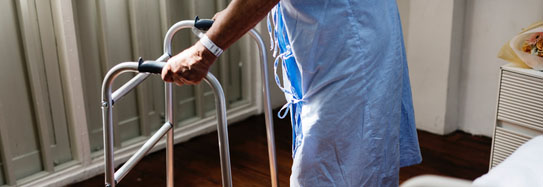
Many chronic or progressive diseases, such as Parkinson’s disease, put you at risk for developing infections. As Parkinson’s disease progresses, it can become increasingly difficult to swallow food and drink without choking. You may aspirate the food or drink, which means it goes into the lungs instead of your stomach. When you aspirate, you can develop pneumonia, an infection that can trigger sepsis.

Sepsis is a life-threatening emergency that happens when your body’s response to an infection damages vital organs and, often, causes death. Like strokes or heart attacks, sepsis is a medical emergency that requires rapid diagnosis and treatment.

Suggested Citation:
Sepsis Alliance. Sepsis and Parkinson’s Disease. 2024. https://staging.sepsis.org/sepsisand/parkinsons-disease/

Updated March 14, 2024.

 

More About Parkinson's Disease

Definition

Parkinson’s disease is a progressive neurological disorder that affects how your muscles move. In the beginning stages, it can be easy to miss the early signs and symptoms of Parkinson’s disease. The most common ones include:

  • Tremors, usually starting with the fingers or hand
  • A noticeable change in handwriting
  • Walking is slower, movement is stiffer
  • Stiff, rigid muscles
  • Loss of balance
  • Stooped posture
  • Quieter voice, difficulty speaking
  • Stiff, mask-like face
  • Difficulty concentrating
  • Memory loss
Diagnosis

Parkinson’s disease is often diagnosed by the typical signs and symptoms related to the disease. There are no specific tests for Parkinson’s disease. However, your doctor may send you for other tests, such as magnetic resonance imaging (MRI) and other imaging tests to rule out any other conditions that may be causing your symptoms.

Causes

It’s not yet known what causes Parkinson’s disease, but researchers believe that some people may be at higher risk of developing the disease. They include people who have:

  • A family history of Parkinson’s disease
  • Been exposed to toxins, such as some insecticides
  • Experienced head trauma
Treatment

Parkinson’s disease is not curable. Treatments focus on relieving symptoms as much as possible and allowing you to remain as independent as possible for as long as possible.

There are different types of drugs that may help relieve or lessen tremors and make it easier to control muscle movement.

There also has been some success with deep brain stimulation for some patients. Research is ongoing.

Falls and Traumas

People with movement disorders like Parkinson’s disease are at risk of falling and injuring their skin. These injuries can become infected. Falls can also cause fractures, such as a broken hip. If a fracture breaks through the skin (an open fracture) or needs surgery for the bone to be set, again, infection is possible.

Healthcare-acquired Infections

When you have a chronic or progressive illness, healthcare facility admissions aren’t unusual. This puts you at risk for developing healthcare-acquired infections (HAIs), most frequently infections such as MRSA and C. difficile.

There are many ways someone with a chronic or progressive can develop an infection, so it’s important to always be aware of the possibility, and to watch for the signs and symptoms of sepsis. Quick recognition and treatment is the key to survival.

Related Resources

Janis Cafferky

After a laser lithotripsy to remove kidney stones, my ureter collapsed. After 2 hospital admissions I was given a nephrostomy bag to drain my kidney. It was 6 days later, saw something was not right with the bag. Went to the ER and while waiting I started have body rigors. Shaking uncontrollably. Blood pressure was very low and very high temp. Had my husband waited 2 hours later I would have not survived. My body faced many battles and 10 months later still does. I lost my left kidney in Sept 2024. I am here, alive. July of 2024, 2 ... Read Full Story


Submit Your StoryView More Stories

Andie Mae

I was sick on and off four times in a month and a half, which I just attributed to my less than ironclad immune system being exposed to baby and daycare germs. The third time I got sick, I thought, “Ok really that’s enough! I’m going in to urgent care to see if we can nip this in the bud.” But all the tests came back negative. And then the next few days I felt back to normal. Well, a week or so later, I start feeling sick again. Thursday morning I woke up and was definitely sick. Same drill. ... Read Full Story

Submit Your StoryView More Stories

Krystin H.

I have been chronically ill most of my life this wasn’t the first time being in the ICU but by far this time was the scariest. I finally got my health together and lost 150lbs. On Jan 17, 2024 after years of saving, I had an extended tummy tuck and breast reduction and lift. For the first 10 days everything was fine. I was healing normally. I was told at the 10 day mark if I was still doing well I could get a first lymphatic drainage massage. The practitioner was not clean (found out later) and within 12 hours, ... Read Full Story

Submit Your StoryView More Stories

Krystal Anderson

Krystal Anderson: A Life Cut Short from Maternal Sepsis, A Legacy of Strength and Resilience Krystal Anderson’s life was marked by vibrant dedication to her passions and profound love for her family. A mother, wife, daughter, sister, and friend, Krystal was a beacon of joy and inspiration to all who knew her. Her sudden passing at the age of 40 from maternal sepsis, mere days after the tragic stillbirth of her daughter Charlotte Willow, left a community in mourning and a family without its cornerstone. Krystal was a dynamic and impactful person to everyone she encountered. She thrived in dual ... Read Full Story

Submit Your StoryView More Stories

Roger Pitre

I want to share my story to raise awareness about the dangers of cellulitis and the importance of seeking medical care early. Without quick action, I might not be here today to tell this story. (Sepsis and Cellulitis) It started with a small blister on my hand from removing ceramic tiles during a home improvement project. I also nicked my hand near the blister. I cleaned the wound, bandaged it, and thought nothing more of it. A few days later, on my 50th birthday, I felt disoriented and developed arm pain, a fever, and nausea. Thinking it might be a ... Read Full Story

Submit Your StoryView More Stories

Other Topics

Parkinson’s Disease