Speaking To Patients

Speaking to patients and family members about sepsis is one of the most important things healthcare professionals can do. It can be difficult to find the right approach to discuss the immediate and long-term effects of the condition because sepsis is still not well known or understood.

Sepsis Alliance provides information and resources that can be used by any healthcare professional to help with patient education. Selected downloadable and printable resources can be found at the bottom of the page, with more found in the Resource Library. All downloads are free of charge. If you are looking for professional resources and training, please visit Sepsis Alliance Institute.

The resources found here may also be helpful for patients and family members who have not received such information when they were hospitalized or being discharged.

Website Resources

If you are looking for ways to speak with patients and family members about sepsis, here are some website resources that may help:

  • Sepsis Basics: This top menu bar section has links to information like What is Sepsis, Risk Factors, Symptoms, and more.
  • Related Conditions: The Sepsis and library addresses over 50 conditions and other circumstances that are somehow connected to sepsis.
  • FAQs: Sepsis Alliance has collected many of the most frequently asked questions about sepsis.
  • Caregivers: You may find it helpful to give the Caregiver Guide to the patient’s loved ones so they have a better idea of what is happening. Caregivers can also join Sepsis Alliance Connect to find support from others.
  • Children: Sepsis Alliance also has resources for children, both for those who have sepsis and for their siblings or other young relatives and friends. Bug, Sepsis Alliance’s friendly ladybug, helps young children understand infections and how to prevent them.
  • Post-sepsis syndrome: Many sepsis survivors are left with lasting effects from their illness, including chronic fatigue, depression, and symptoms of PTSD. Post-sepsis syndrome (PSS) is becoming more known in the medical community, but still too many healthcare providers don’t know about or understand the issues related to PSS.
  • Support for Survivors and Loved Ones: Sepsis Alliance Connect is a virtual support community designed for the millions of people personally affected by sepsis.
  • Multi-Language Resources: Sepsis Alliance has selected resources available in Spanish, Tagalog, Chinese, and Vietnamese. The sepsis.org website can also be translated into multiple languages by clicking the accessibility menu icon that appears on the bottom right corner of every website page.

Updated February 10, 2025.

Downloadable and Printable Resources

When a Loved One Has Sepsis: A Caregiver’s Guide
Guide
PreviewDownload
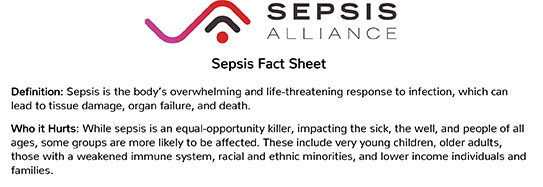
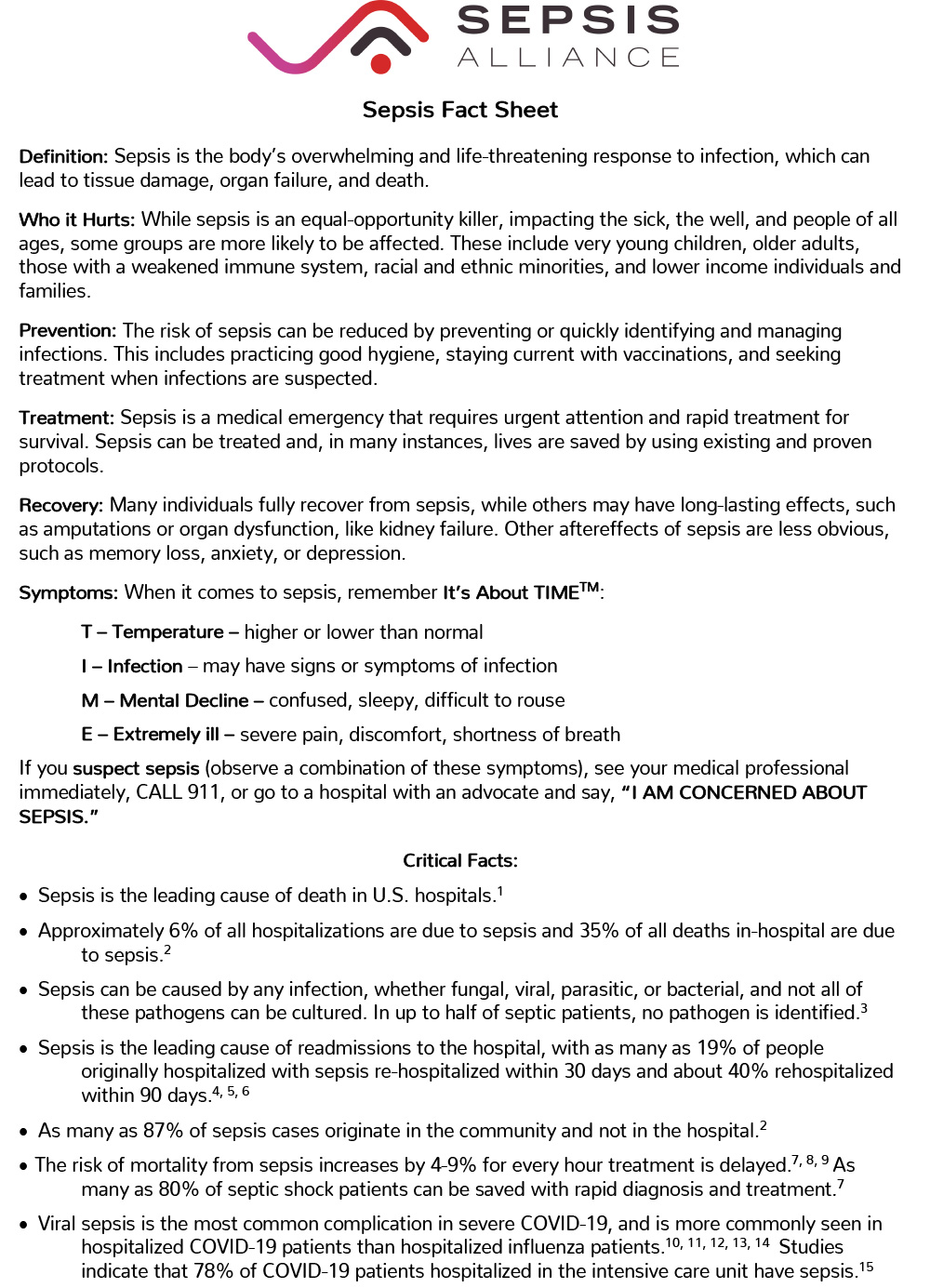
Sepsis Fact Sheet
Fact Sheet
PreviewDownload
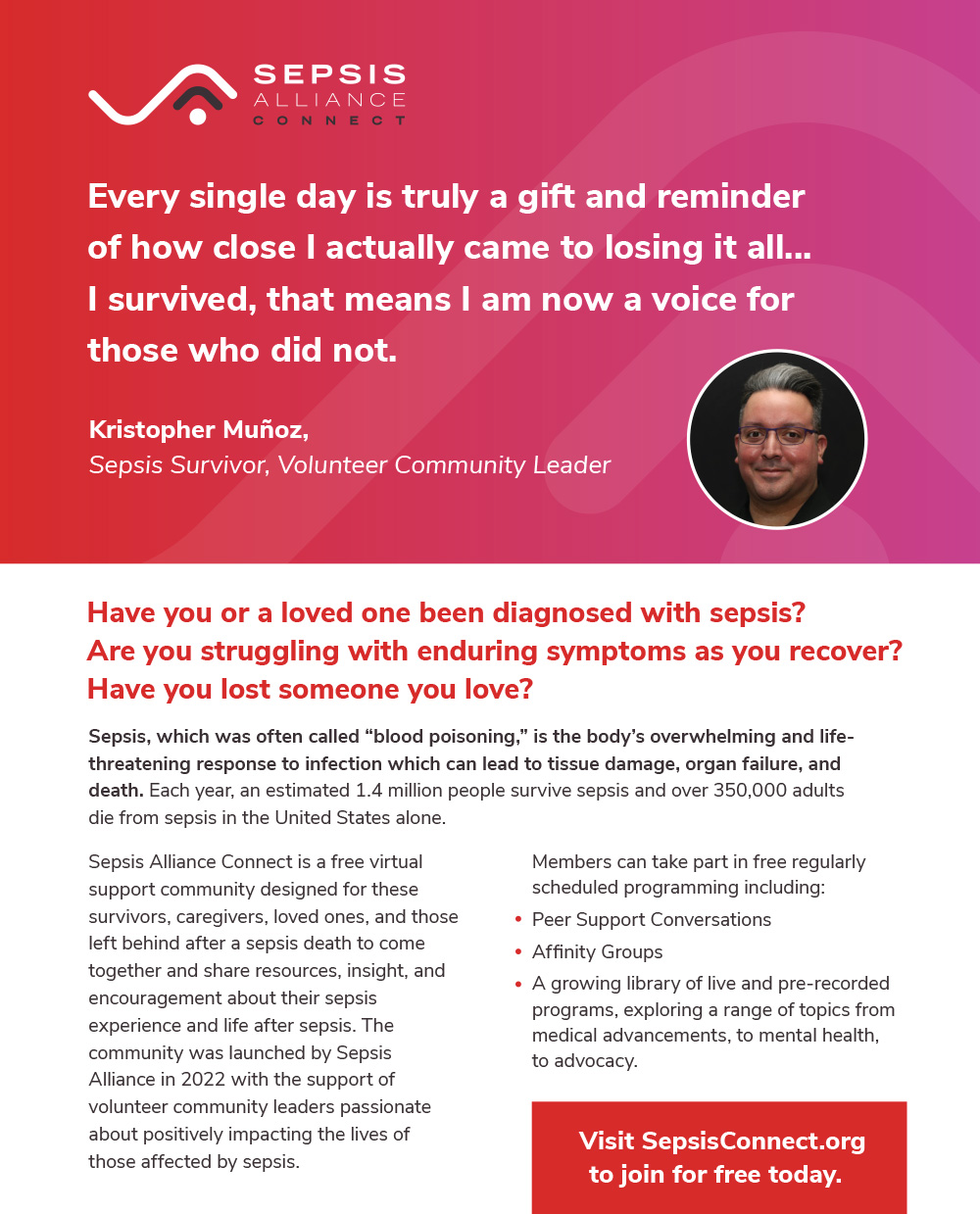
Sepsis Alliance Connect Printable Flyer
Infographic
PreviewDownload
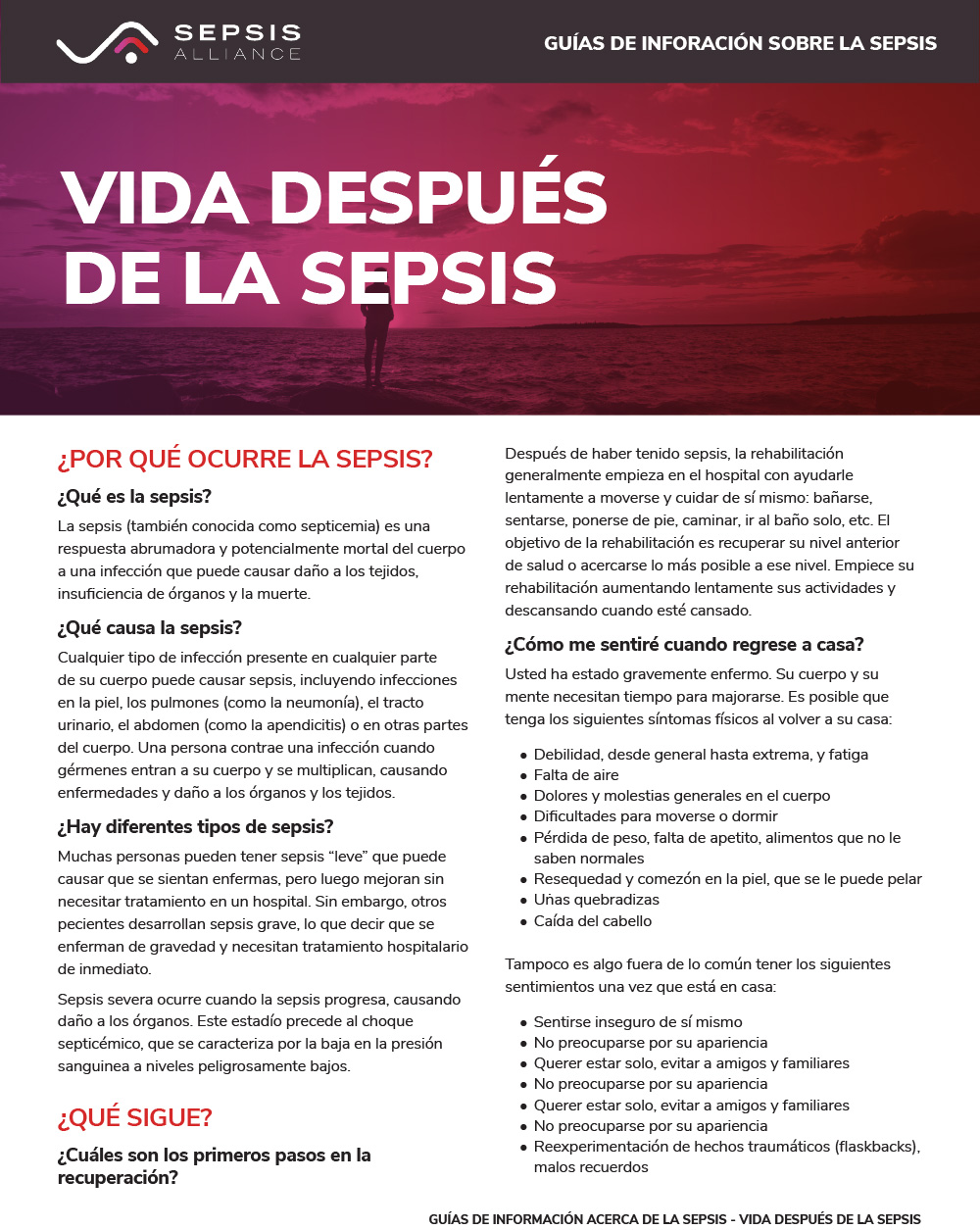
Tienes Sepsis. Ahora ¿Qué Sigue?

Information Guide
PreviewDownload

Tienes Sepsis. Ahora ¿Qué Sigue?

  • To submit this form you are required to enter your first name, last name, a valid email address and your role.

You Have Sepsis. Now What? (for children)
Information Guide
PreviewDownload

You Have Sepsis. Now What? (for children)

  • To submit this form you are required to enter your first name, last name, a valid email address and your role.

Life After Sepsis – Español
Information Guide
PreviewDownload

Life After Sepsis – Español

  • To submit this form you are required to enter your first name, last name, a valid email address and your role.

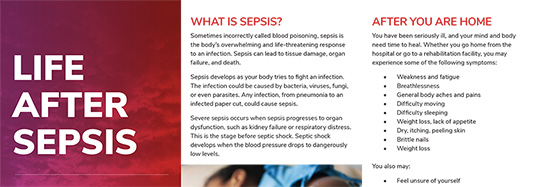
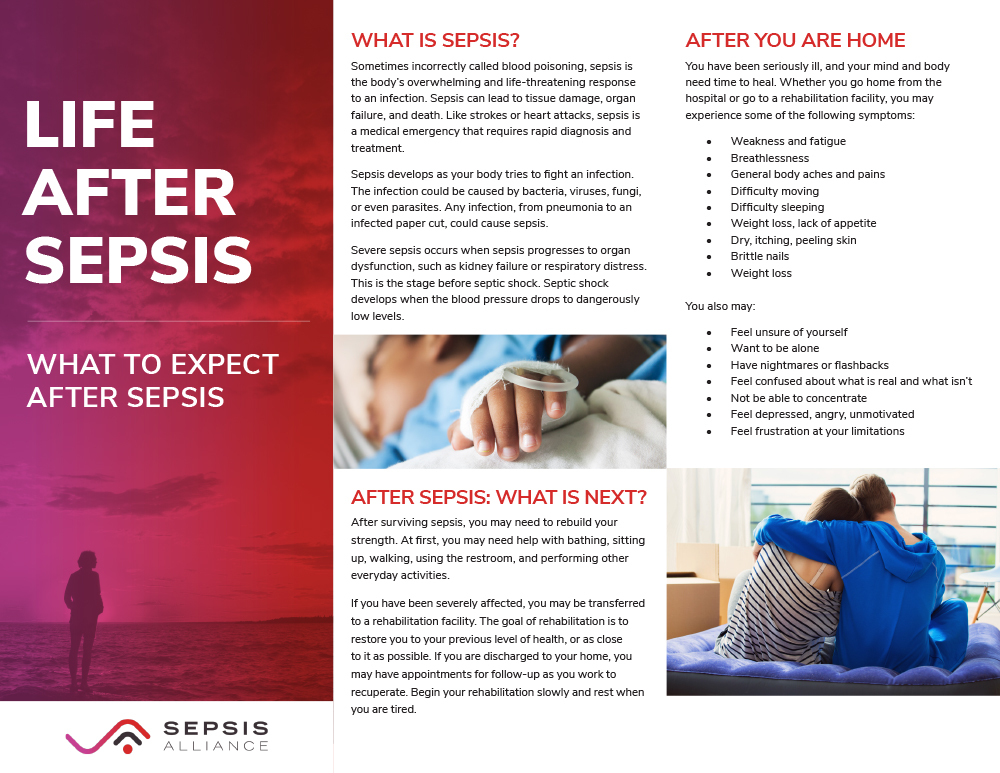
Life After Sepsis
Trifold
PreviewDigitalPrint

Life After Sepsis

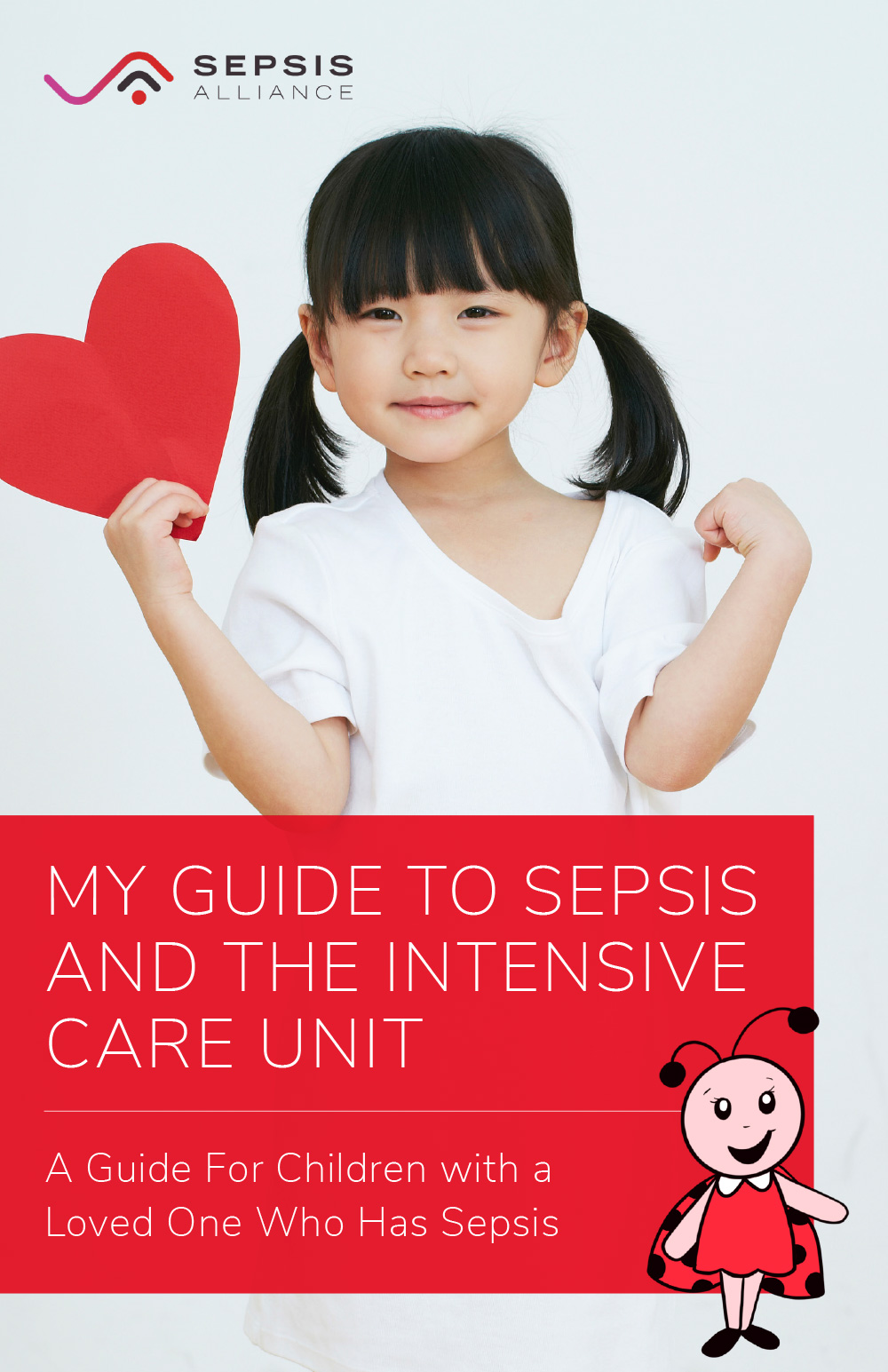
My Guide to Sepsis and the Intensive Care Unit – Children
Information Guide
PreviewDownload

My Guide to Sepsis and the Intensive Care Unit – Children

  • To submit this form you are required to enter your first name, last name, a valid email address and your role.

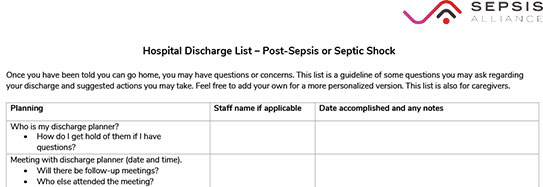
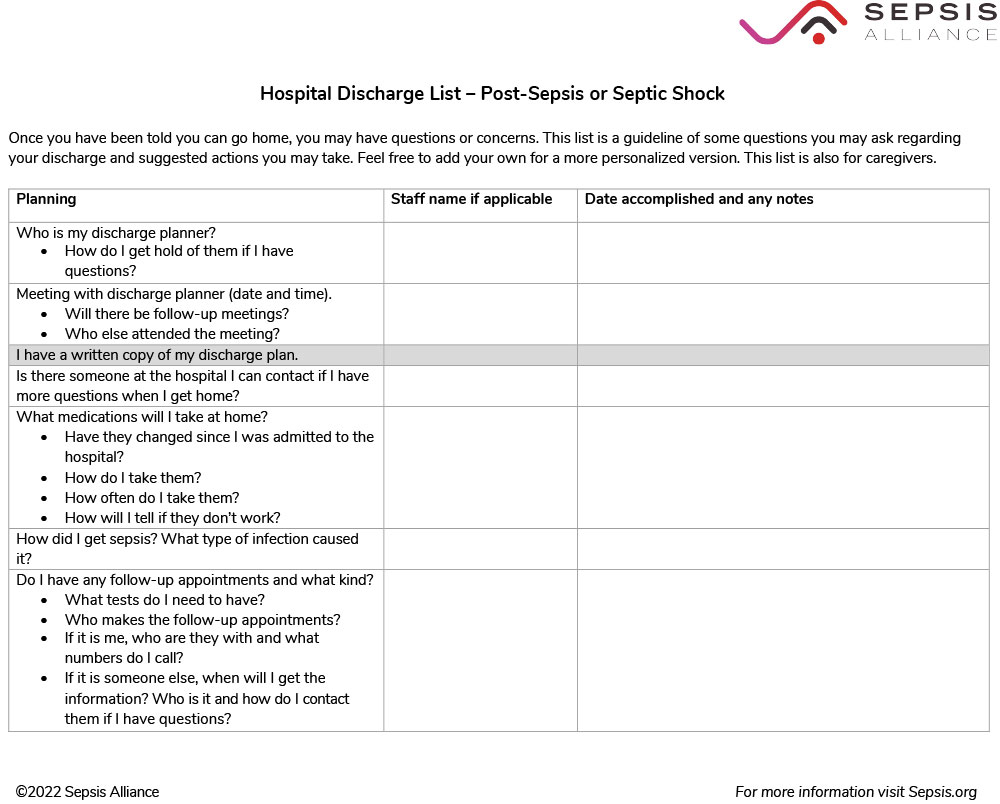
After Discharge Checklist
Checklist
PreviewDownload
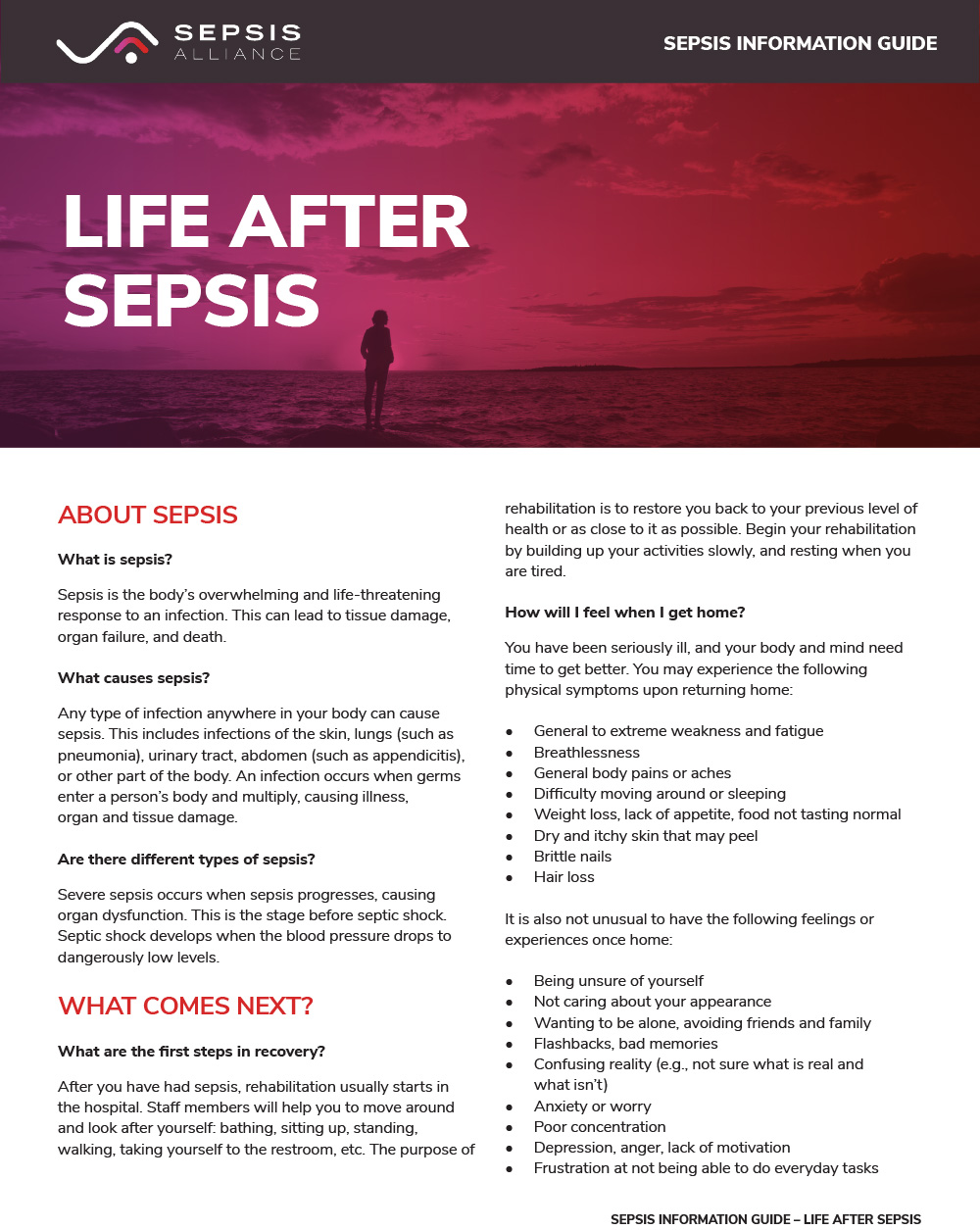
Life After Sepsis
Information Guide
PreviewDownload

Life After Sepsis

  • To submit this form you are required to enter your first name, last name, a valid email address and your role.

Life After Sepsis
Video
View
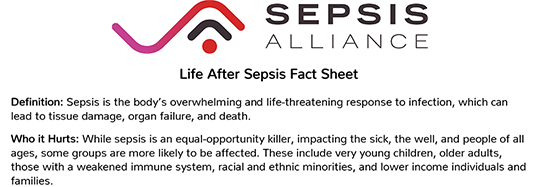
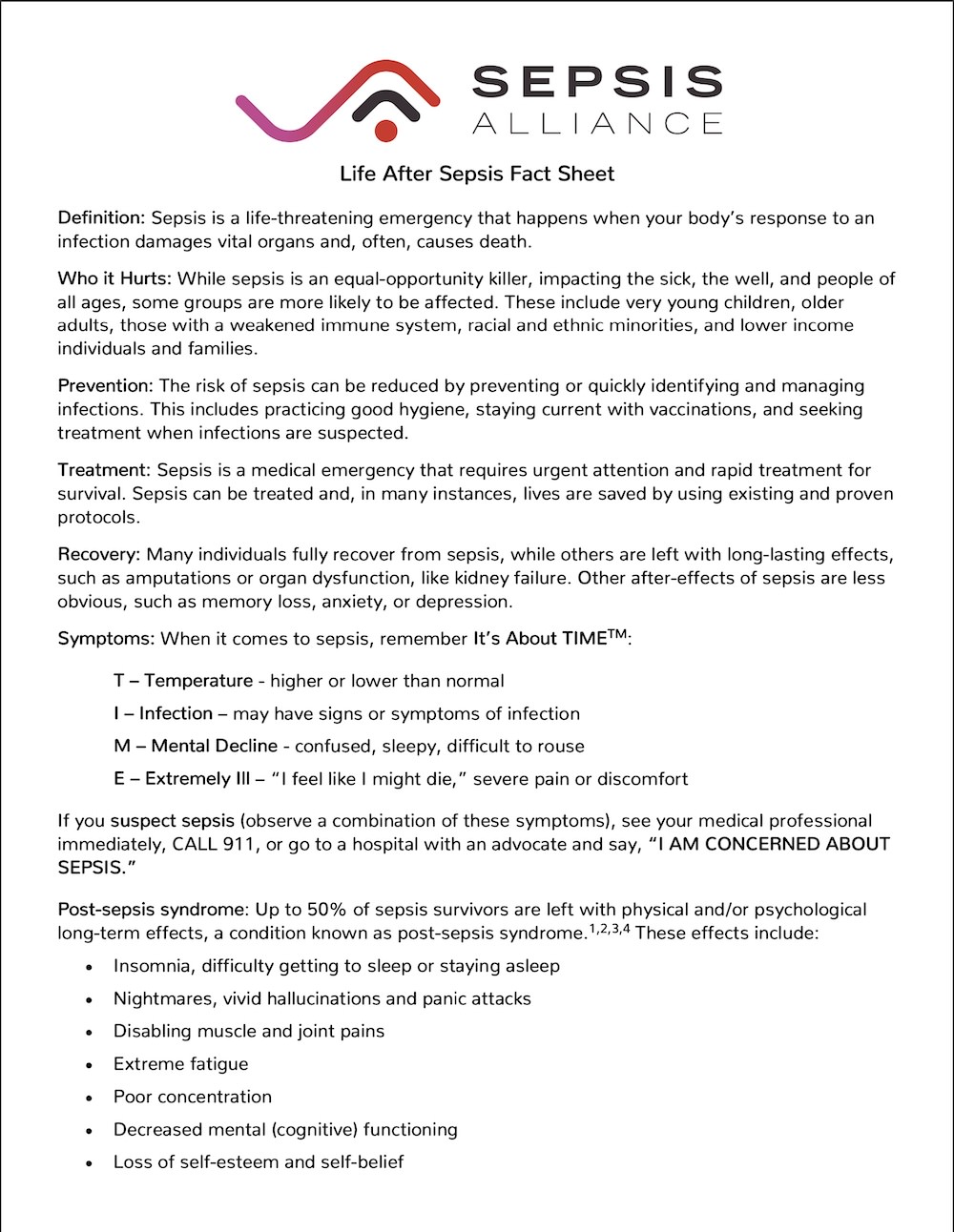
Life After Sepsis Fact Sheet
Fact Sheet
PreviewDownload

For additional free downloadable and printable resources, visit the Sepsis Alliance Resource Library.

Sepsis Alliance Institute

Are you looking to connect with other healthcare professionals to see how they communicate with the public? Or you want to learn more about managing sepsis?

Elevate your sepsis care with education, resources, and peer-to-peer networking. Sepsis Alliance Institute provides online sepsis education including best practices in sepsis recognition, treatment, and care. There are training modules and webinars (live and recorded), many with free RN CE credits.

Faces of Sepsis

Carl Alford

Carl’s story At just under 3 years old, my son developed a croupy cough with no fever or other concerning symptoms, so we carried on as usual. On day 5 of the cough, his cough developed a strider quality so I took took him to his PCP. At the time, his oxygen level was normal and his lung sounds were good except for the cough. He was started on steroids and sent home. The following day he had improvement in the strider but began running low grade intermittent fevers. He continued to eat, drink, pee, poop and appear as expected. ... Read Full Story

Submit Your StoryView More Stories

Kelli Taylor

My name is Kelli. I was a healthy person for most of my life – productive, happy, grateful, and filled with hope. Amid the 2020 COVID-19 pandemic, however, I was diagnosed with breast cancer. Optimistic doctors called my treatment plan a “chip shot” because of the tumor’s position— a standard surgery followed by radiation. But just after the surgery, a secondary infection cropped up, requiring another procedure. The second surgery was a success, and I finally began the delayed course of radiation. Goodbye, hospitals and cancer! Then, just before my final week of radiation, I developed sepsis. Radiation was not ... Read Full Story

Submit Your StoryView More Stories

Kimberley Sidhu

In May 2024, I gave birth while unknowingly battling invasive group A strep (Sepsis and Group A Streptococcus) —a life-threatening infection that went undiagnosed. The signs of maternal sepsis (Sepsis and Pregnancy & Childbirth) were there, but they were dismissed, and my husband and I were never taught what to watch for. I was lucky enough to get to the hospital to be seen and I was placed in ICU and needed emergency life saving surgery. I was in critical condition, fighting for my life.  It was only after surgery, I began to realize my condition was severe, and there was a lack of awareness ... Read Full Story

Submit Your StoryView More Stories

Lindsey Rowe

I’m 35 and have been an ICU nurse for 13 years. I have taken care of many patients in septic shock. Yet when I was sent home from two ERs with a “just a virus” diagnosis, I didn’t think much of it. I was the sickest I had ever been, but if they thought I was okay? I must be. I woke up from a nap literally blue. Everything hurt, including wearing clothes. My husband luckily didn’t listen to me and immediately called 911. The paramedics who came couldn’t get my blood pressure to read. They had an even harder ... Read Full Story

Submit Your StoryView More Stories

Rose Aumen

As a registered nurse, I knew when assessing patients in the Emergency Room the appearance/signs/symptoms of sepsis. I never thought I would become a sepsis patient myself. I was in pretty good health for a 65-year-old female. March of 2024 I had chills that morning, My right leg was hurting the day before and was still somewhat painful but tolerable. I took two Tylenol and went back to bed. After resting I felt pretty good, Later that evening I suddenly was unable to walk and had severe pain in my right hip. Bacteremia and sepsis took over my entire body. ... Read Full Story

Submit Your StoryView More Stories