Sepsis Survivors

Being discharged from the hospital is a good day for most people, but it can also be stressful. Post-sepsis life can have challenges, especially if you have been left with long-term problems related to your illness. Some sepsis survivors recover completely and resume their lives, while others may struggle to cope, something no one expected.

Here you can find information to help you navigate post-sepsis life.

Starting in 2019, Sepsis Alliance added to the awareness efforts by launching Sepsis Survivor Week, which focuses on the survivors and the challenges they may face. Click here to learn more about Sepsis Survivor Week.

FAQ

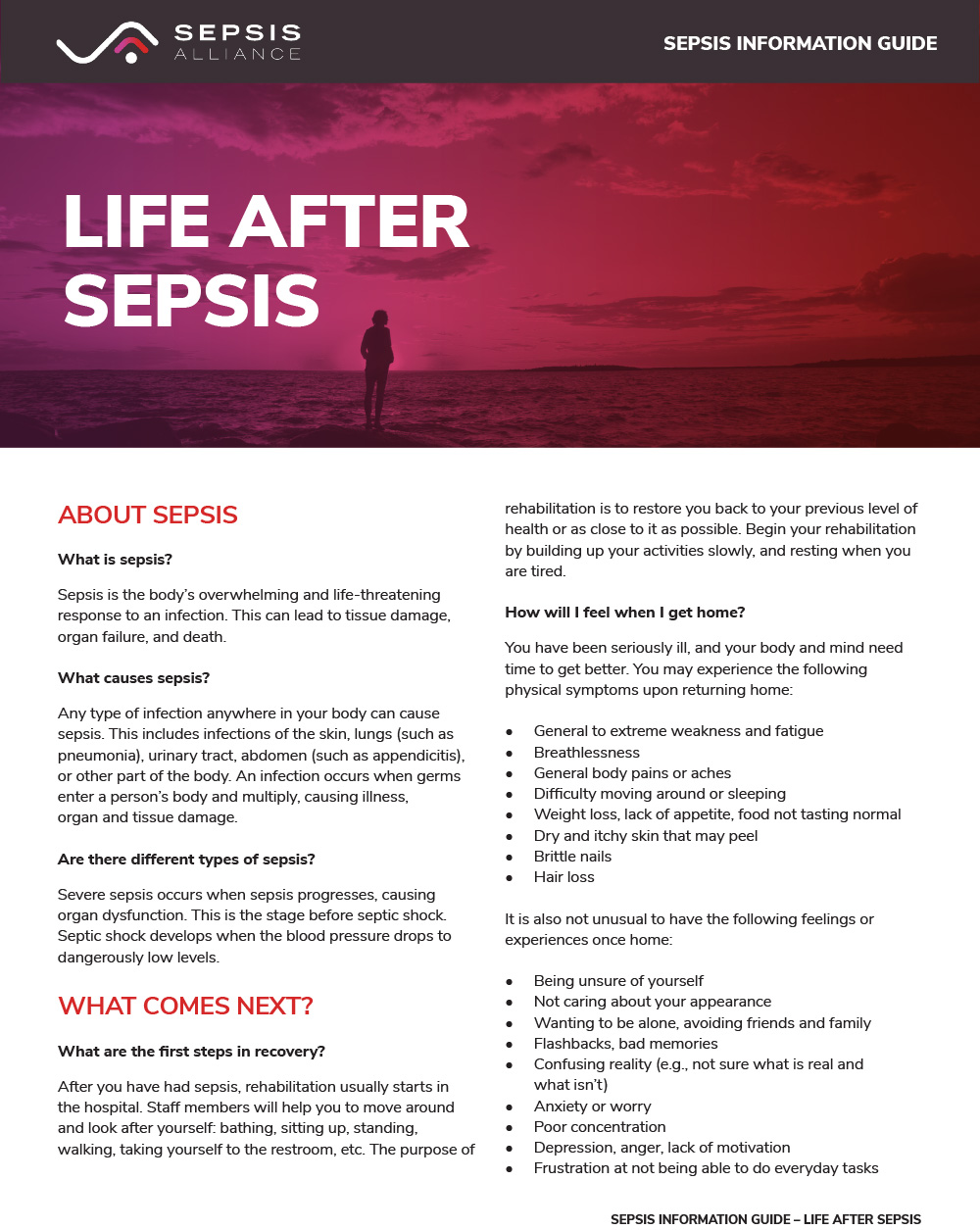
Our Frequently Asked Questions (FAQ) section addresses many questions related to sepsis and life after sepsis. Survivors and their family and friends can find answers to questions, such as can I get sepsis again, why am I so tired, and can sepsis be prevented? You may also find our Life After Sepsis Information Guide helpful in explaining some of the issues that could last long after discharge from the hospital.

KNOW THE SEPSIS FACTS

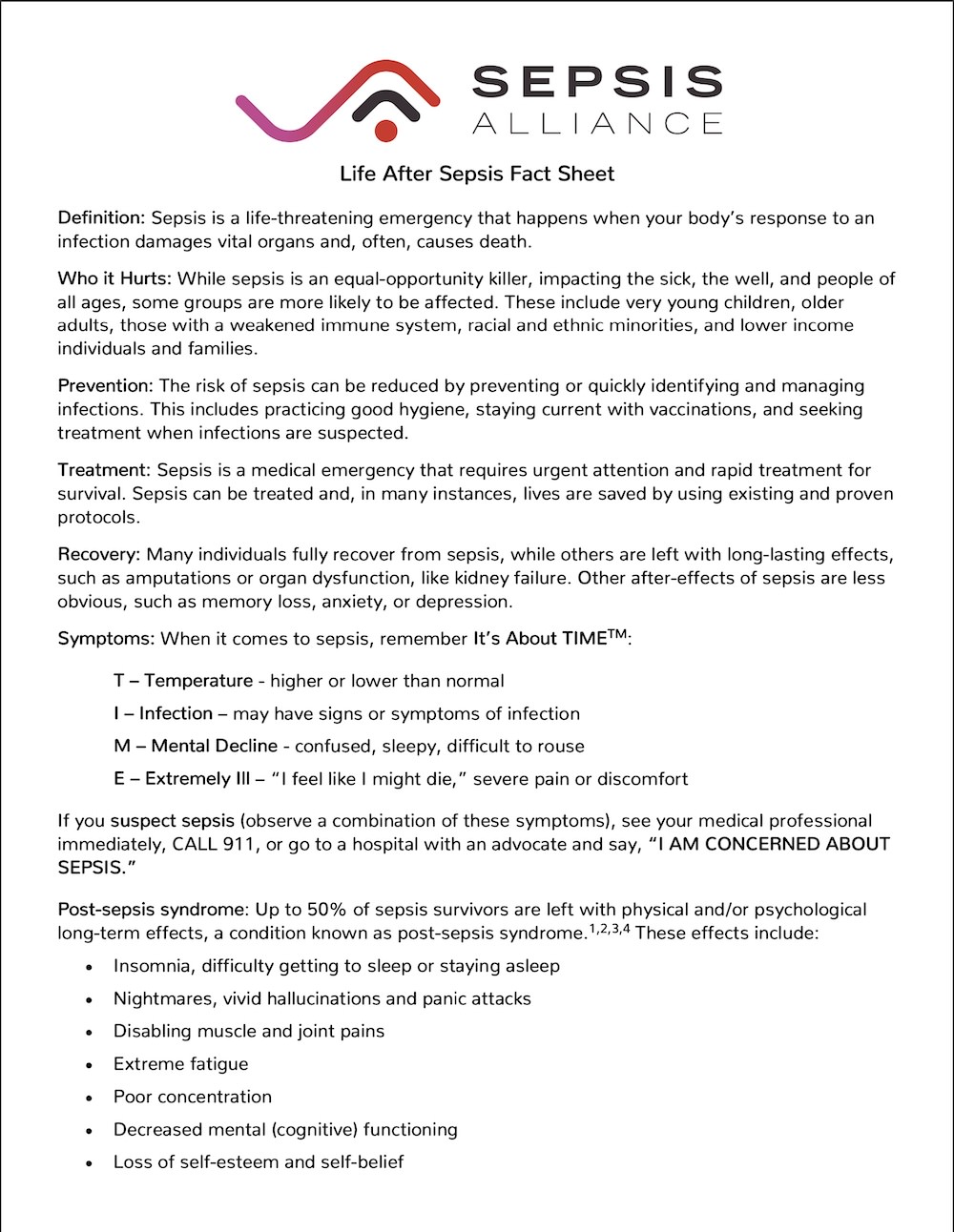
Many researchers are working to learn more about what causes sepsis, how it affects patients, and life after sepsis. Learn more about the facts and statistics in the Life After Sepsis Fact Sheet.

AFTER DISCHARGE FROM THE HOSPITAL

Once you have been discharged from the hospital, it may seem that you’ve been left to fend for yourself. Discharge instructions are sometimes rushed or may be incomplete, or you may not think of the questions you need to ask. To help you with the hospital to home or hospital to rehab transition, Sepsis Alliance has put together a checklist with the most common issues that come up. Click here for the list.

We have also created a discharge kit for those being released from the hospital after COVID-19. Download the guide here.

Since sepsis survivors are at risk for repeat infections, you should also speak with your doctor about any vaccinations that you may need to reduce the likelihood of getting another infection. You can read about these vaccines at the Centers for Disease Control and Prevention (CDC), the World Health Organization (WHO), and the European Center for Disease Prevention (ECDP), which provide schedules for adults and children. You can also learn more at Prevention: Vaccines. Regaining your health after sepsis can also be slow, but good nutrition can help you along the way. Learn more about nutrition after sepsis here.

CONNECT WITH OTHER SEPSIS SURVIVORS

Sepsis Alliance Connect is a virtual support community designed for the millions of people affected by sepsis. Click here to learn more or to sign up.

LEARNING ABOUT POST-SEPSIS SYNDROME (PSS)

Many people who spend time in an intensive care unit (ICU) develop problems like post-traumatic stress disorder (PTSD). Those who were treated for sepsis may develop not only PTSD, but other problems as well. You can learn more about PSS here and PTSD here.

COPING WITH MENTAL HEALTH ISSUES

Your mental health is a vital part of your overall recovery. If you find yourself struggling with anxiety, depression, or any other mental health issue and you don’t know where to turn, visit our Mental Health Resources page for a list of organizations that may help you.

EXPLAINING POST-SEPSIS ISSUES TO OTHERS

If you are experiencing problems after your discharge, either physical, cognitive, or psychological, you may find it difficult to explain. To help explain post-sepsis issues, Sepsis Alliance has written letters that explain sepsis and PSS to:

CONDITIONS THAT CAN CAUSE SEPSIS

Anyone can develop sepsis, but some people are at higher risk, including sepsis survivors. Learn how sepsis is associated with various conditions, such as diabetes or cancer in our Sepsis and… library.

Updated June 13, 2025.
Video Resources

Faces of Sepsis: Survivor Panel

Presented by sepsis survivors for sepsis survivors, this webinar includes a panel discussion about life after sepsis. Three sepsis survivors will tell their stories and will answer attendee questions about their experiences with sepsis, as well as how they found purpose and returned to life after sepsis.

Septic Shock with Multiple Amputations: A Survivor’s Story

Kelli Taylor

Survivor

My name is Kelli. I was a healthy person for most of my life – productive, happy, grateful, and filled with hope. Amid the 2020 COVID-19 pandemic, however, I was diagnosed with breast cancer. Optimistic doctors called my treatment plan a “chip shot” because of the tumor’s position— a standard surgery followed by radiation. But just after the surgery, a secondary infection cropped up, requiring another procedure. The second surgery was a success, and I finally began the delayed course of radiation. Goodbye, hospitals and cancer! Then, just before my final week of radiation, I developed sepsis. Radiation was not ... Read Full Story

Submit Your StoryView More Stories

Roger Pitre

Survivor, Survivor

I want to share my story to raise awareness about the dangers of cellulitis and the importance of seeking medical care early. Without quick action, I might not be here today to tell this story. (Sepsis and Cellulitis) It started with a small blister on my hand from removing ceramic tiles during a home improvement project. I also nicked my hand near the blister. I cleaned the wound, bandaged it, and thought nothing more of it. A few days later, on my 50th birthday, I felt disoriented and developed arm pain, a fever, and nausea. Thinking it might be a ... Read Full Story

Submit Your StoryView More Stories

Liz P.

Survivor, Survivor, Survivor

Friday the 13th, yes, Friday the 13th! A beautiful autumn day in October 2023 was a routine day for my husband and myself, a retired, relatively healthy couple aged in our mid seventies. While preparing to retire, later in the evening than usual for us, and feeling the need to urinate, my attempt was unsuccessful. After several additional attempts, but without pain, I made a mental note to contact my physician in the morning, believing I might have a UTI. A decade earlier, I had, with great pain, passed a kidney stone without difficulty, but had experienced the same earlier ... Read Full Story

Submit Your StoryView More Stories

Kate Marlowe

Survivor, Survivor, Survivor, Survivor

Sepsis saved my life. What?! Hear me out. I was a school teacher for 20 years, giving 110% of myself to my career, district, and most importantly, my students. I spent evenings, weekends, holidays, and summers recovering. Frequent illness, being the type A, minorly OCD, personality with a need for control, led me down many roads of fitness and nutrition programs in order to keep my head above water along the journey. I even left for a year, roughly halfway through my career, due to constant illness and burn-out, only to return to the classroom, I felt it was my ... Read Full Story

Submit Your StoryView More Stories

Kathleen C.

Survivor, Survivor, Survivor, Survivor, Survivor

In April 2024 went into severe septic shock from bowel rupture. (Sepsis and Perforated Bowel) Was on ventilator for 8 days, went into liver failure, heart failure, Afib, and renal failure requiring dialysis. I then develop PRES syndrome and lost my vision. Was in hospital for 7 weeks. All organs have returned to normal and my vision is back. I currently have post sepsis syndrome but blessed to have made it through such a critical health crisis. Read Full Story

Submit Your StoryView More Stories

Help Raise Sepsis Awareness

Many sepsis survivors and loved ones feel the need to help spread sepsis awareness so others don’t go through the same thing. There are many ways you can do this:

Faces of Sepsis

Share your story through our Faces of Sepsis feature. There are more than 1,000 stories from survivors and people who have lost a loved one to sepsis. Sharing your story has three initial benefits. Many survivors and loved ones feel that writing the story down and sharing it allows them to process feelings about their illness and the aftermath. It also helps others, the readers, learn that they aren’t alone.

Too many sepsis survivors think that no one understands what they’ve gone through but when they read these stories, they no longer feel so alone. These stories also show the readers that sepsis can affect anyone – their family, friend, coworker.

Host a talk

Sepsis Alliance has made available a kit called Sepsis 911, Community Education Presentation. A second one focusing on sepsis and aging is also available.

By giving talks to social groups, friends and family, school, even coworkers, you can help educate the people around you about sepsis, what it is, how it happens, and how to reduce your risk of developing it. The kit provides you with material you need for a successful talk, such as a leader’s guide (with script), a video, customizable promotional materials, surveys, and more.

Host an awareness event/fundraiser

Local awareness events are being held across the country, spearheaded by individuals like you. Whether you want to hold a Stomp Out Sepsis or Sips for Sepsis event, or anything in between, these events help raise awareness and raise funds for Sepsis Alliance, to help support the organization’s awareness efforts. Or if you’d rather do an online awareness event, that works too. Check out the host an event page for other ideas and a fundraising toolkit.

Give to Sepsis Alliance

Sepsis Alliance is the nation’s leading organization, working in all 50 states, to save lives and reduce suffering by improving sepsis awareness and care. As a non-profit organization, Sepsis Alliance relies on generous gifts from people like you. Many employers match donations to non-profit organizations, so you may want to check if your employer does. Click here to give now.

Buy Sepsis Alliance products

You can find sepsis awareness products in our store. From symptoms cards to lapel pins, these products may introduce the word to someone who has never heard of it, stimulating a conversation about what sepsis is.

Fill out the form below to download

  • To submit this form you are required to enter your first name, last name, a valid email address and your role.

Download