Sepsis and Home Care

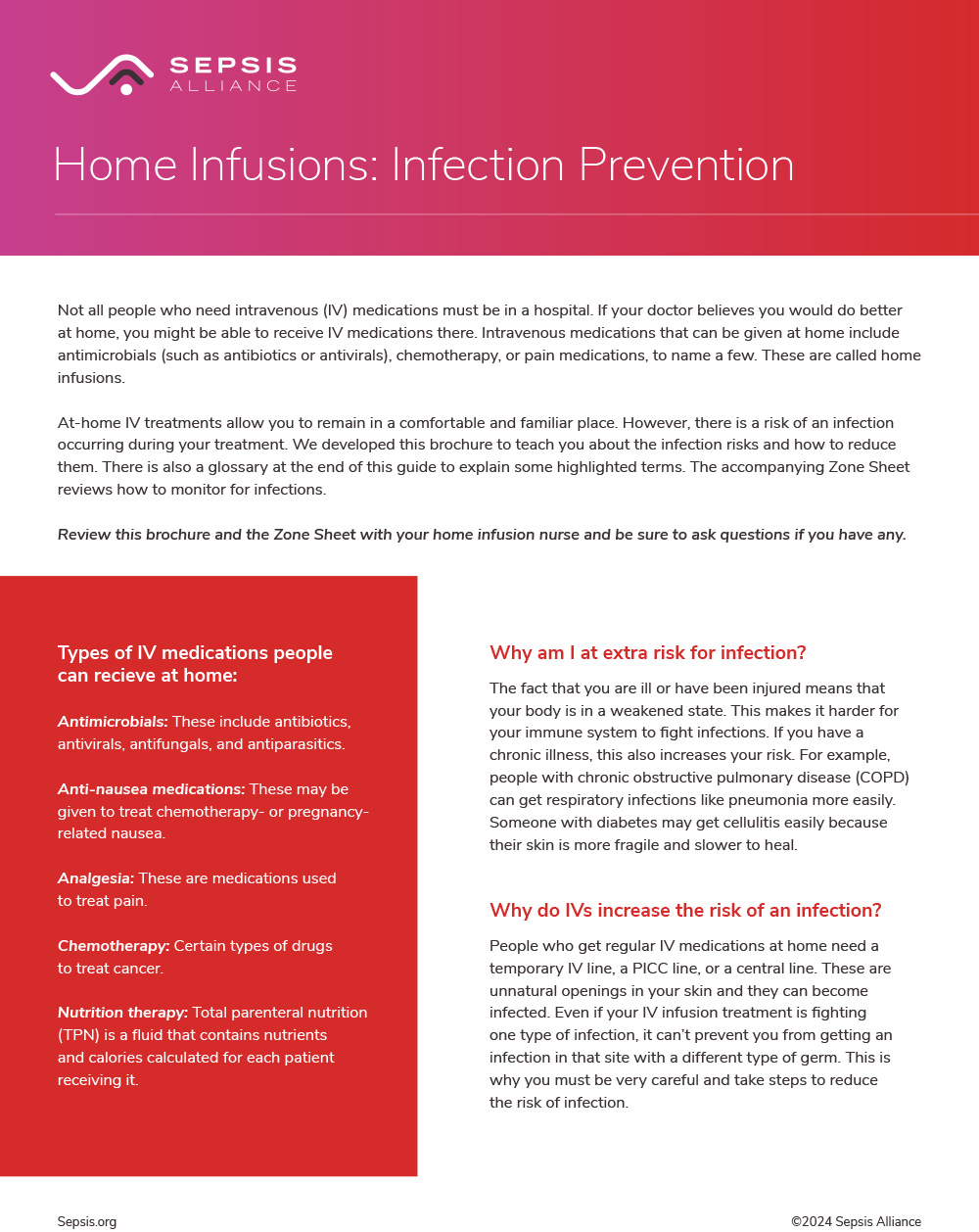
If you are receiving home health care (also called home health services), this means that you need some medical care, but not enough to be admitted to a hospital or skilled nursing facility.

There are several advantages to receiving home care, such as you:

  • Aren’t exposed to the microbes (germs) that may circulate in the facility.
  • Have less frequent person-to-person contact with staff, volunteers, and others patients who could expose you to an infection.
  • Are in a familiar and more comfortable environment.

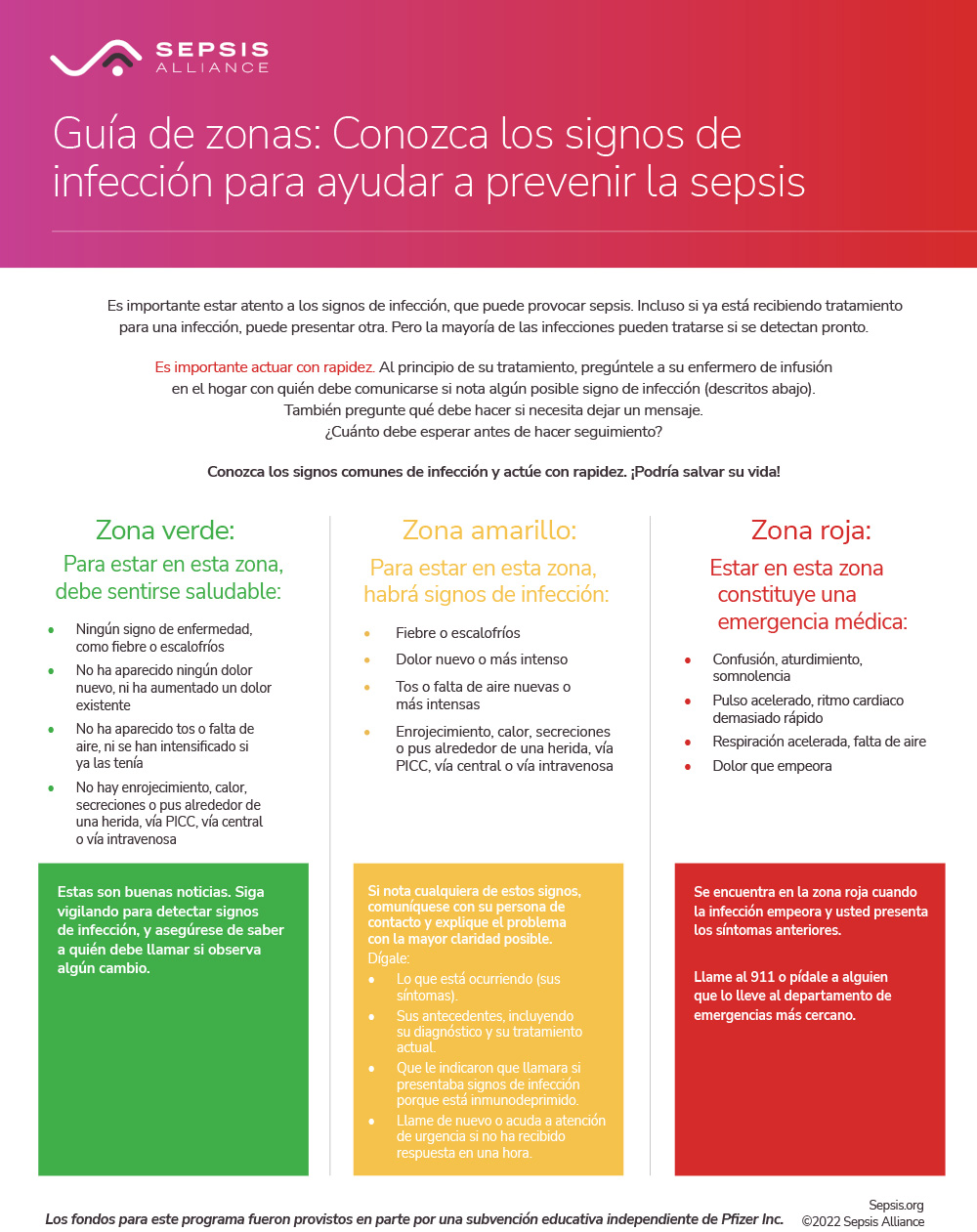
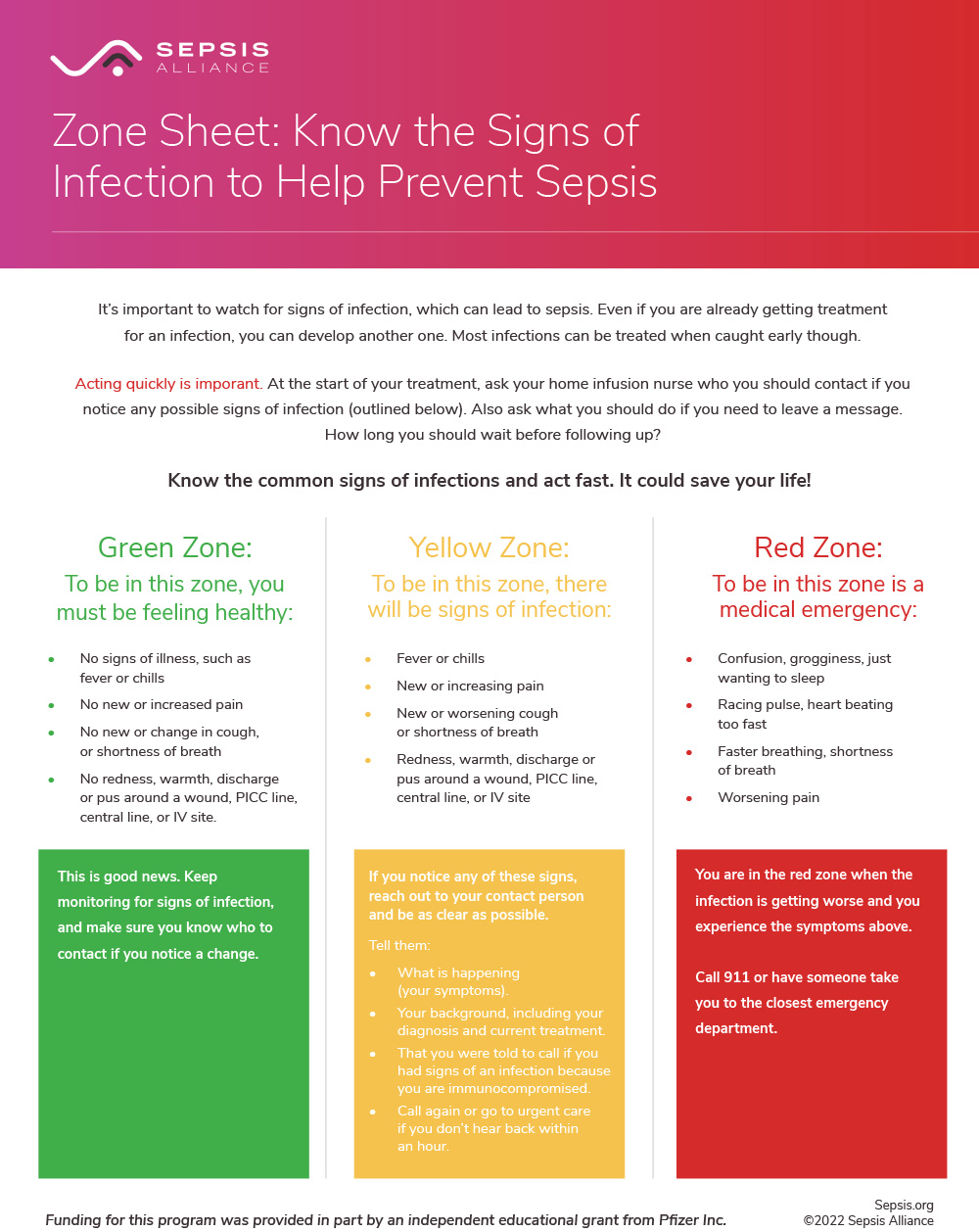
However, there is still a risk that you could contract an infection while you are receiving home care. Any type of infection could cause sepsis. If you are a caregiver to someone receiving home care, this information is important for you as well. Sepsis, which was often called blood poisoning, is the body’s life-threatening response to infection. Like strokes or heart attacks, sepsis is a medical emergency that requires rapid diagnosis and treatment.

Suggested Citation:
Sepsis Alliance. Sepsis and Home Care. 2023. https://staging.sepsis.org/sepsisand/home-care/

Updated October 25, 2023.
 

More About Home Care

Infection Risks

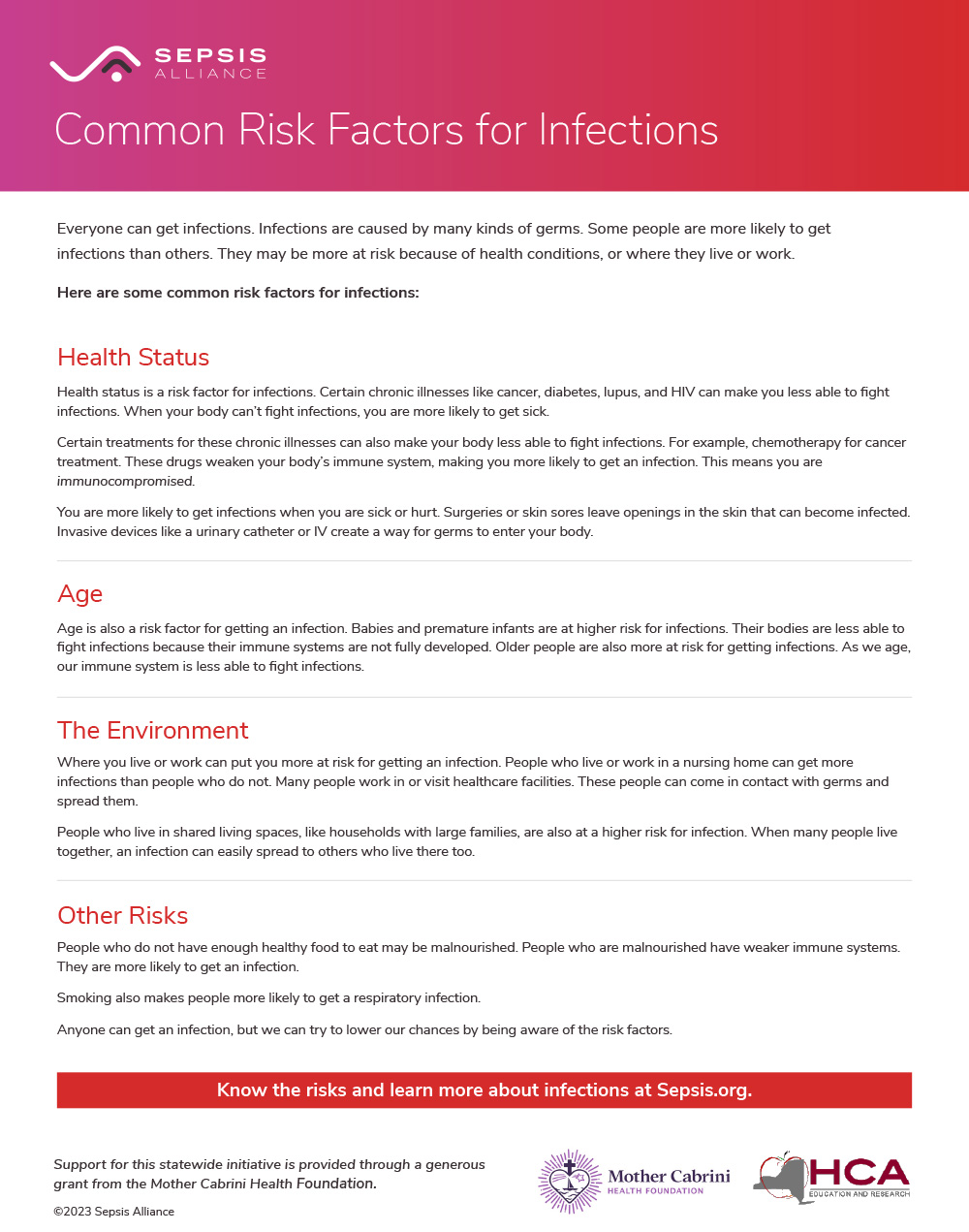
When people receive home care, it is because they are ill, injured, or unable to care for themselves without help. Some of those people may be at increased risk of infection because they:

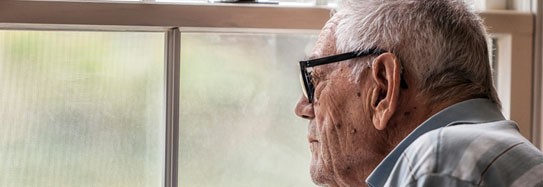
  • Are very old; the immune system becomes less robust as people age.
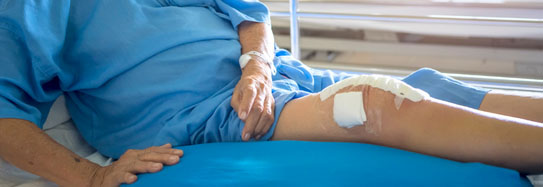
  • Are recovering from invasive medical or surgical procedures, or childbirth; open wounds are a source for infection.
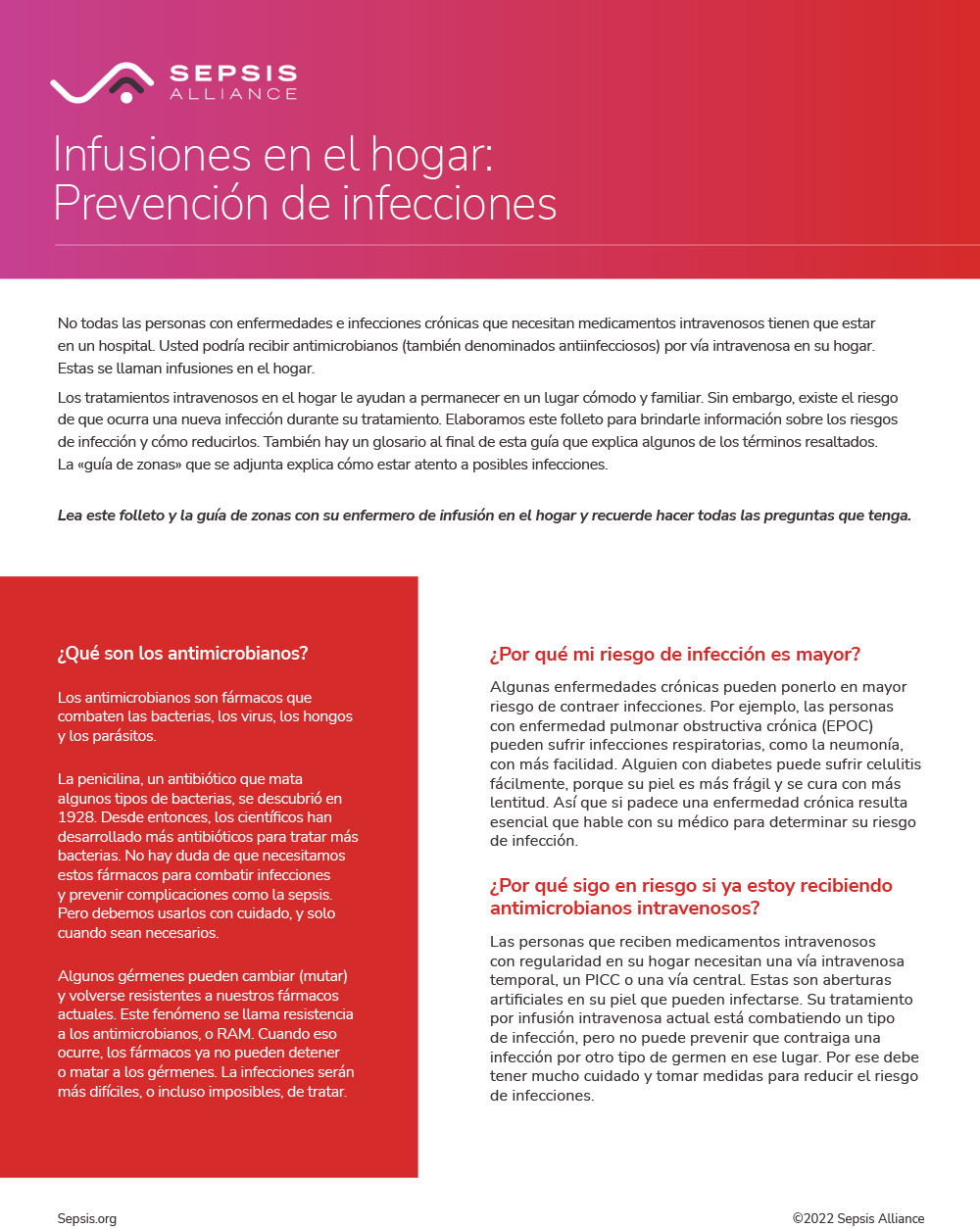
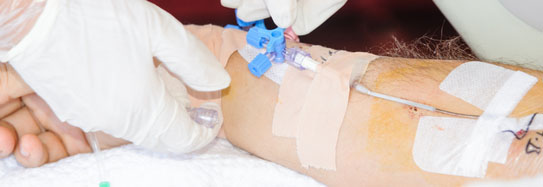
  • Have an invasive medical device, such as a urinary catheter or intravenous; breaks in the skin or entries into the body can allow bacteria to enter.
  • Have one or more chronic illnesses, such as diabetes or COPD; people with chronic illnesses may get infections more easily.
  • Have a weakened immune system; a weakened immune system makes it harder to fight infections.
  • Are immobile; staying in one place for extended periods can increase the risk of pressure injuries (ulcers). It can also contribute to pneumonia because deep breathing and exercising helps the lungs expand and air flows more easily.
  • Are malnourished; the body requires nutrients to stay strong and to keep the immune system healthy.
Infection Prevention

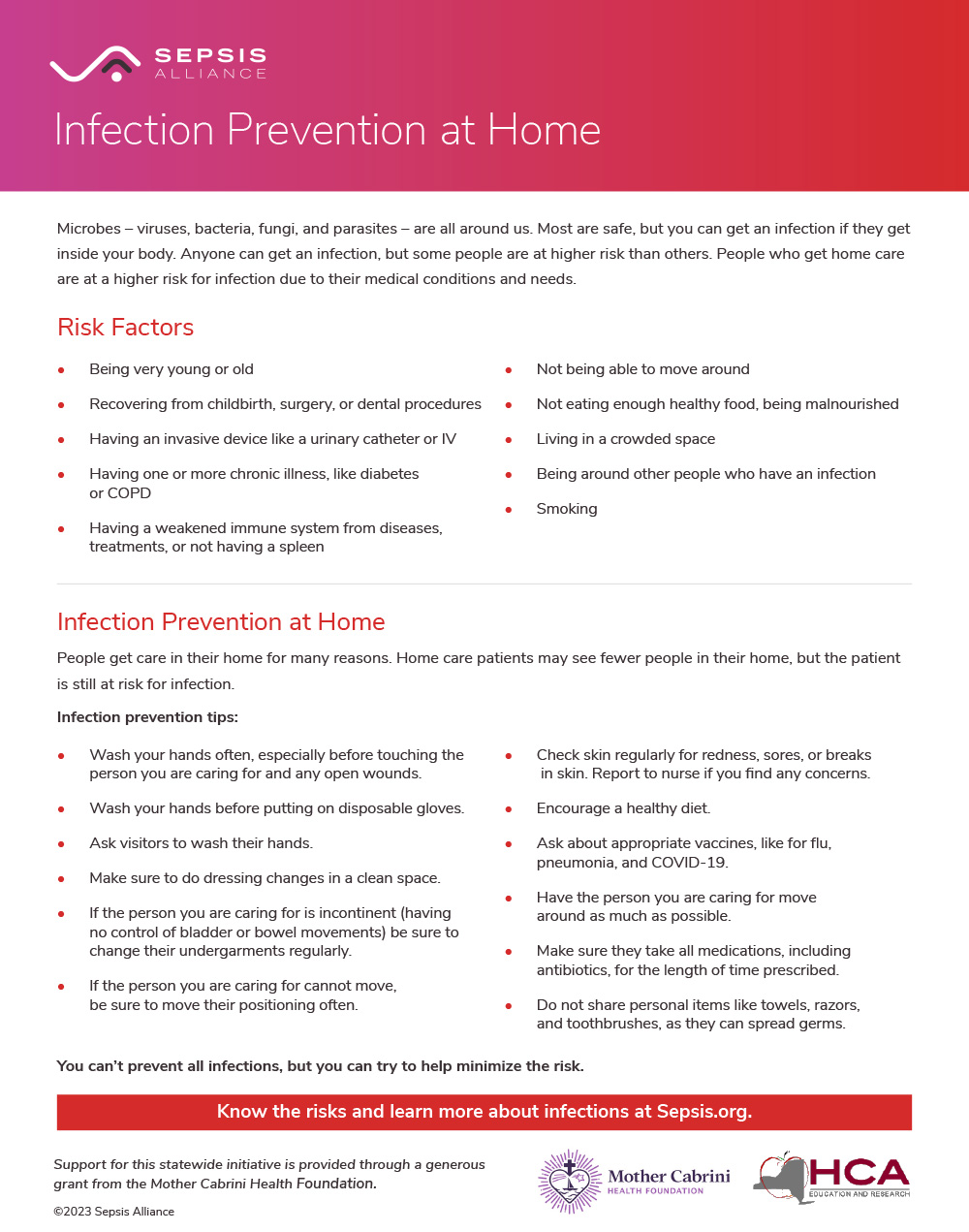
Infection prevention is sepsis prevention. There are some simple steps to follow that will help decrease your risk of getting an infection while you are receiving home care.

  • Ask everyone, including the healthcare providers, who enters your home to wash their hands thoroughly with soap and water.
  • Wash your own hands frequently, especially before touching a wound, dressing, IV, or catheter, even if you will be wearing gloves.
  • Ensure there is a clean space to keep dressing or treatment supplies and ensure that the dressing changes are done in a clean environment.
  • Eat a healthy diet.
  • Get all recommended vaccines.
  • Move about as much as you can.
  • Take all medications, including antibiotics, for the recommended length of time as prescribed.
  • Don’t share personal items, such as towel, razors, and toothbrushes to reduce the spread of germs.

If you are the caregiver of someone receiving home care:

  • If the person is incontinent of urine or stool, ensure frequent changes of their briefs or pads. Clean the skin well, but gently. Report any redness or signs of the skin breaking down in the genital area to the home health provider.
  • If the person unable to move about on their own, they need regular positioning from side to back to side so they are not staying too long in one spot. This will reduce the risk of pressure injuries (ulcers or bed sores) from forming. Inspect the skin regularly, especially the hips, coccyx (backside), and elbows. These are the areas that break down most easily.

Related Resources

Sepsis and Home Care

Sepsis and Cancer

Information Guide

Invasive Devices

  • To submit this form you are required to enter your first name, last name, a valid email address and your role.

Information Guide

Cancer

  • To submit this form you are required to enter your first name, last name, a valid email address and your role.

Information Guide

Aging

  • To submit this form you are required to enter your first name, last name, a valid email address and your role.

Other Topics

Janis Cafferky

After a laser lithotripsy to remove kidney stones, my ureter collapsed. After 2 hospital admissions I was given a nephrostomy bag to drain my kidney. It was 6 days later, saw something was not right with the bag. Went to the ER and while waiting I started have body rigors. Shaking uncontrollably. Blood pressure was very low and very high temp. Had my husband waited 2 hours later I would have not survived. My body faced many battles and 10 months later still does. I lost my left kidney in Sept 2024. I am here, alive. July of 2024, 2 ... Read Full Story

Submit Your StoryView More Stories

Andie Mae

I was sick on and off four times in a month and a half, which I just attributed to my less than ironclad immune system being exposed to baby and daycare germs. The third time I got sick, I thought, “Ok really that’s enough! I’m going in to urgent care to see if we can nip this in the bud.” But all the tests came back negative. And then the next few days I felt back to normal. Well, a week or so later, I start feeling sick again. Thursday morning I woke up and was definitely sick. Same drill. ... Read Full Story

Submit Your StoryView More Stories

Krystin H.

I have been chronically ill most of my life this wasn’t the first time being in the ICU but by far this time was the scariest. I finally got my health together and lost 150lbs. On Jan 17, 2024 after years of saving, I had an extended tummy tuck and breast reduction and lift. For the first 10 days everything was fine. I was healing normally. I was told at the 10 day mark if I was still doing well I could get a first lymphatic drainage massage. The practitioner was not clean (found out later) and within 12 hours, ... Read Full Story

Submit Your StoryView More Stories

Krystal Anderson

Krystal Anderson: A Life Cut Short from Maternal Sepsis, A Legacy of Strength and Resilience Krystal Anderson’s life was marked by vibrant dedication to her passions and profound love for her family. A mother, wife, daughter, sister, and friend, Krystal was a beacon of joy and inspiration to all who knew her. Her sudden passing at the age of 40 from maternal sepsis, mere days after the tragic stillbirth of her daughter Charlotte Willow, left a community in mourning and a family without its cornerstone. Krystal was a dynamic and impactful person to everyone she encountered. She thrived in dual ... Read Full Story

Submit Your StoryView More Stories

Roger Pitre

I want to share my story to raise awareness about the dangers of cellulitis and the importance of seeking medical care early. Without quick action, I might not be here today to tell this story. (Sepsis and Cellulitis) It started with a small blister on my hand from removing ceramic tiles during a home improvement project. I also nicked my hand near the blister. I cleaned the wound, bandaged it, and thought nothing more of it. A few days later, on my 50th birthday, I felt disoriented and developed arm pain, a fever, and nausea. Thinking it might be a ... Read Full Story

Submit Your StoryView More Stories

Home Care